 English
 Lietuvių
 Latviešu
 Polski
 Русский
 Español
 Français
 Italiano
 Română
 ελληνικά
 Nederlands
 Deutsch
 Português
 Bokmål
 Svenska
 Suomi
Suomi
 Eesti
Eesti
 Čeština
 български
 Dansk
Dansk



Fragrance basics
Perfume samples: how to use them
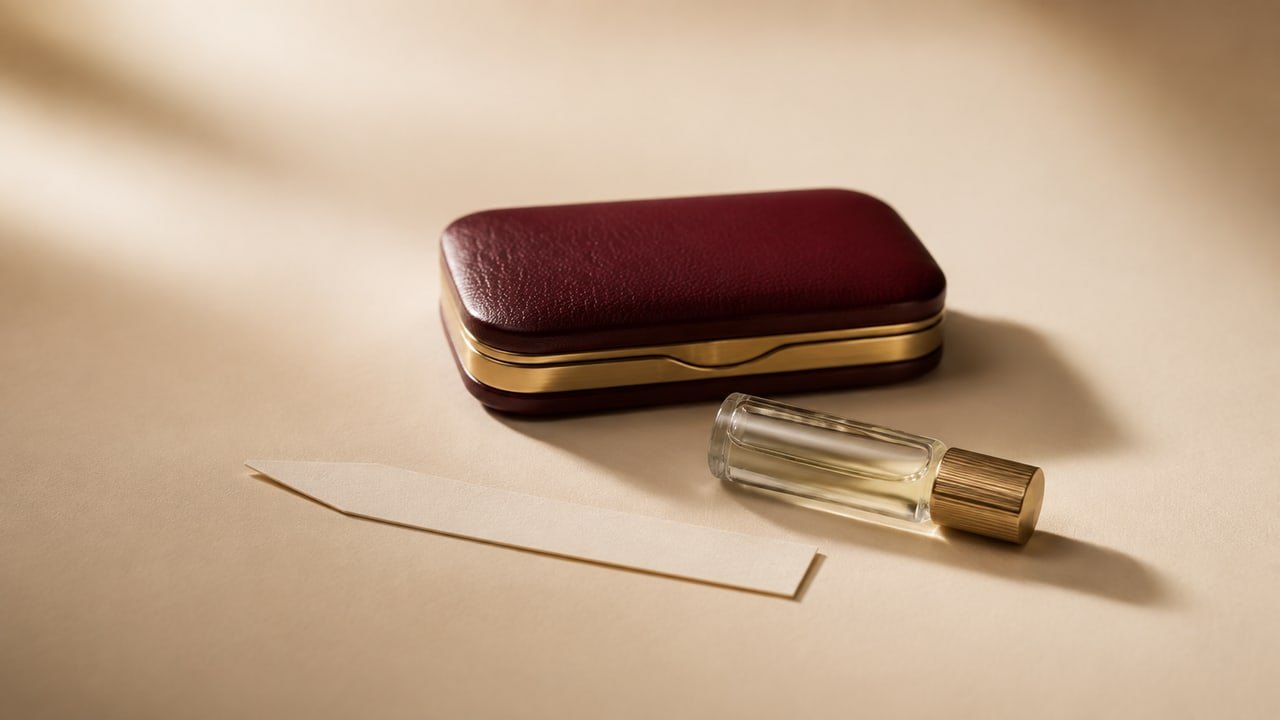
To learn how to use perfume samples, start with a fragrance blotter, then try the scent on skin following the product instructions. Record your impressions and revisit them later. Try sets on separate days for easier comparison. This guide gives no spray count or duration for 3 ml: neither was measured. It is a selecti
Continue in the catalogue
3 ml perfume samples
Samples let you get to know a chosen fragrance before selecting a larger bottle.
Perfume samples for women
Within the women's sample category, choose specific compositions to explore for yourself.
Perfume samples for men
Men's samples let you compare selected fragrances in a smaller format.
How does a sample differ from a full-size bottle?
A sample lets you get to know a fragrance before choosing a larger bottle. The Perfume Society recommends living with a scent you like and suggests a sample as one way to do this. A pleasant first impression does not yet tell you whether you will want to wear the fragrance in everyday life.
This guide aims to help you make a personal testing plan. Before you start, we suggest writing down what you want the fragrance for: work, leisure, travel or a gift. Then assess it against that same purpose. The question “do I like it?” becomes more specific: “would I want to smell like this in my chosen situation?” This is an editorial suggestion, not a measurement scale.
Size alone does not establish that a sample and a large bottle have identical contents. When comparing the packaging, check the full product name and version. If the information differs, ask the seller to clarify exactly what you are testing. Leave space for these details on your notes sheet.
A 3 ml sample: how long does it last?
We have no exact answer for this sample: the number of sprays and the duration of use have not been measured. We therefore give neither a dose per press nor a promise that the sample will last a set number of days. Nor do we convert a volume of three millilitres into specific hours of fragrance longevity.
Before testing, plan what you want to learn from the amount you have. On one occasion you could observe your first impression; on another, whether you want to return to the scent. If little liquid remains, repeat the most important unresolved test first. You do not have to use up the bottle to decide against choosing it.
Record how many times you pressed the atomiser during a particular test, but do not apply that number to another sample. The note helps you remember what you did; it is not a laboratory measurement of the atomiser. Comparing doses precisely would require a separate measurement protocol and equipment. This guide contains no results from such a study.
Should you test a sample on skin or paper?
Start with a fragrance blotter: absorbent paper intended for testing. The Perfume Society suggests using it for an initial shortlist, then testing a scent you like on your own skin. The same organisation advises taking your time and allowing the first impression to change. Here, blotter and skin serve different purposes.
Write the name on the blotter before spraying. Do not keep it next to another freshly sprayed blotter. Describe your impression in your own words: fresh, dry, sweet, floral or reminiscent of wood. You do not need to guess the full composition. The note is there to help you choose, not to identify the manufacturer's formula.
Use only a product intended for application to skin and follow its instructions. For assessment, we suggest choosing one clearly marked test area. If the test is unpleasant, you need not continue just to complete the plan. Record the experience separately from the scent description: “I did not like it” and “I do not know which note it is” are different answers.
Explore this topic in the guide: How to test perfume: blotter and skin.
Why can I no longer smell my own perfume after a while?
One possible explanation is olfactory adaptation: reduced sensitivity after exposure to an odour. The abstract of Dalton's review describes adaptation to continuous or repeated odour exposure. The response depends on the circumstances of exposure. The fact that you can no longer smell the fragrance yourself does not prove it has disappeared completely.
This source cannot establish why you cannot smell your particular sample today. It also gives no universal recovery time for everyone's sense of smell. That is why there is no rule here about ten minutes outdoors or a compulsory break of several hours. Fragrance remaining on the skin has not been measured in this guide.
In practice, we suggest not deciding to spray more solely because you failed to notice the scent at one moment. Record when you checked and what you noticed, and leave the final conclusion for another test. If someone else also described the fragrance, record their comment separately. It is a second impression, not a measured scent-trail distance.
What should you check on a sample's label?
Read the labelling information together with the packaging and any enclosed leaflet. Regulation (EC) No 1223/2009 of 30 November 2009 covers cosmetic product labelling in Article 19. It provides an exemption from stating nominal content for packaging containing less than 5 g or 5 ml, free samples and single-application packs.
Paragraph 2 of the same article allows certain precaution and ingredient information to appear on enclosed or attached material when it is impracticable to label it in the usual way. This is not a general exemption from providing information. Where a product's small size makes it impracticable to show the batch number or identifying reference on the product itself, that information may appear only on the packaging.
Do not try to calculate shelf life from a sample's size. For products with a minimum durability exceeding 30 months, the regulation provides for information about use after opening, except where that concept is not relevant. The open-jar symbol is therefore not unconditionally required on every perfume sample. Ask the seller if the information is unclear. This is not individual legal advice.
How can you compare a sample set?
We suggest trying the fragrances in a set separately and using the same notes sheet for each. The Perfume Society recommends recording which fragrance you sprayed where and limiting the number tested at once. The one-fragrance-per-day approach suggested in this plan is a matter of convenience, not a proven physiological limit.
Compare like with like: sweetness with sweetness, the desire to wear a scent again with that same desire. Do not compare one fragrance's vivid opening with another's later impression without noting the difference. Record the time and setting for each entry. This makes it clearer why you chose one option.
At the end of your selection process, allow three possible answers: I want to try it again; it is not my direction; I am not sure yet. The last answer is enough. A sample set is not an exam in which you must pick a winner. If choosing a gift, record separately what you liked and what you know about the intended recipient's preferences.
If you liked two fragrances equally, write down one remaining question about each. For example: would I want this sweet opening on a working day, or do I prefer the later impression? Devote the next test to that question instead of starting the whole set again.
Explore this topic in the guide: How to Find Your Scent?.
Choose a purpose
Write down where you intend to wear the fragrance and what you want to compare.
Label the sample
Record the exact name and version, and keep the packaging.
Try a blotter
Assess your first impression; this is an initial shortlist, not the whole decision.
Test on skin
Follow the product instructions and note the test area.
Return to your notes
Compare your first and later impressions without reporting unmeasured hours as a result.
Repeat an inconclusive test
If you have some sample left, check what is still preventing you from deciding.
- I know the exact product name and version.
- I have kept the labelling and directions for use.
- I have recorded my first and later impressions.
- I have separated my preference from guesses about the composition.
- My decision does not depend on a promised number of hours.
Does a sample smell the same as a large bottle?
A small volume alone does not confirm that. Compare the product name and version; we did not study whether the contents are identical in this work. If anything is unclear, ask the seller to clarify.
Do you have to try a sample set in one day?
No. We suggest spreading out the tests so that you can compare clear notes. This is an editorial plan; we do not claim that comparing several fragrances is physiologically impossible.
How many sprays are in a 3 ml sample?
We have no verified number for this sample: it has not been measured. We give no general conversion from millilitres to presses or days.
How should you store a sample between tests?
The Perfume Society recommends protecting perfume from heat and light. Also follow the instructions for the particular product and keep its labelling.
Where should you look for the batch number?
Check both the bottle and the packaging. Article 19 of Regulation (EC) No 1223/2009 allows the batch number or identifying reference to appear only on the packaging where the product's small size makes it impracticable to provide this information on the product itself.
Related articles
Sources and verification limits
- FAQs — Perfume shopping (how to test and store perfume)
- Psychophysical and behavioral characteristics of olfactory adaptation (Chemical Senses, 2000)
- Regulation (EC) No 1223/2009, 30 November 2009; consolidated version 18 May 2026
- MARABIKA editorial requirements and draft recommendations for this guide
- 3 ml perfume samples online | MARABIKA — MARABIKA catalogue observation, 5 September 2026
- 3 ml perfume samples for women | MARABIKA — MARABIKA catalogue observation, 5 September 2026
- 3 ml perfume samples for men | MARABIKA — MARABIKA catalogue observation, 5 September 2026